

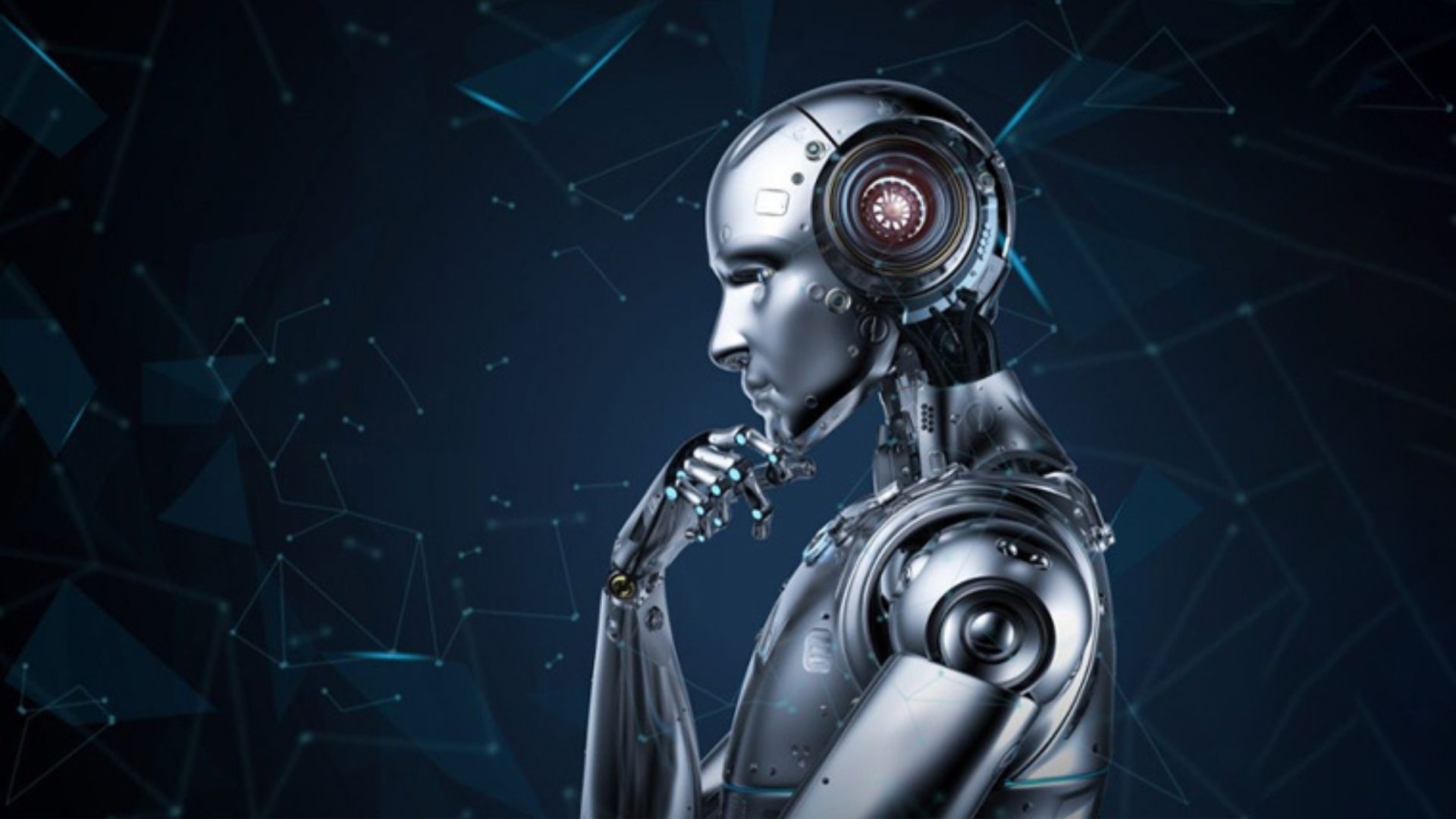
How is AI Technology Made and How Does it Work Artificial Intelligence (AI) is the process of infusing human intelligence into machines to enable them to think like humans. To understand this technology easily, you need to know how Artificial Intelligence (AI) works.
In fact, AI is a field of computer science that uses the human mind. AI system does not run by itself, it has to be fed with data, i.e. information and data, which is a kind of ‘data source’. And the AI system processes it. It builds a model from the way it is initially trained and produces results based on data, interacts with, or mimics the human mind. The more data is fed into the AI, the better it becomes. However, not all AI systems require large data sources. Especially ‘big data’ is a very important aspect of AI. AI requires four main processes to work, machine learning, neural networks, data and data processing, and algorithms.
Machine learning (ML) is called the foundation of AI. It simply means; Teaching machines how the human mind works. For this, as much data as is entered into the machine learning tool, an AI system, a data set is built from it.
Another important part of AI is the neural network, which is also known as the ‘building blocks of AI’. Especially machine learning of AI systems is due to neural networks. Which is a neural network architecture inspired by biology. Just as the neurons of the human brain are interconnected, in the same way, there are many types of hidden layers in the neural network. Data processing takes place by passing through those layers. As the data passes through the layers, it enters the deep learning stage of the machine. By connecting all the connections in the data, the AI system gives good results.
Its method is as follows;
First, the input layer receives the data. The hidden layer processes the data. Finally, the result is obtained through the output layer. The most important thing for artificial intelligence is data. Data is also called ‘Fuel for AI Systems’. Because without a data set to train an AI model, nothing can be done. Such a data set needs to have many types of characteristics. As the data should be complete, no data should be missing. Data continuity is also required for AI systems to work. Data should be accurate and factual. It should not contain any wrong data. Also, the data should be updated. Generally, three types of data input should be given to train an AI system, i.e. structured, unstructured, and semi-structured data.
Structured data includes dates, locations, credit card numbers, number series, or other standard input methods. In structured data, data is always in a standard format.
Algorithms are the last important part of artificial intelligence. Algorithms are also called the ‘backbone’ of AI. Algorithms, in particular, are mathematical processes that describe how AI systems learn, improve decision-making, and manage problem-solving. The raw data is transformed into useful data by the algorithm itself and it comes to the work of the customer and the company.
Now that you understand how an AI system works, let’s look at some real-life examples of it. Human life is surrounded by the progress made in the field of technology. People have started using devices, technologies, and systems with new types of AI features from normal technology to new ones from morning to night. Moreover, human life is becoming easier and affected by the use of technology with AI features.
After unlocking your phone, whenever you go to a social media platform, you check the notifications and updates that have come through overnight. Here, AI is sitting in the background and working. Filters what to show you and presents it to your screen. Because the AI system knows what you like to see based on your surfing habits (website and social networking habits), search results, shopping, routine posts and photos, voice commands, location, etc. Friend recommendations, shopping advice, dining options, and news updates are sent to you based on your past activity. Not only this, AI’s machine learning technology is also working to protect you from false news and cyberbullying.
Like if you are spending time watching a long video then AI will understand that you must watch that video and ads will appear on it. For example, if you are searching for a company’s website to know about it and you reach its YouTube channel, in this case, the YouTube channel has fewer subscribers, but the video shows an advertisement. Because you stop there for a while to get information. At the same time, AI understands and tries to take full advantage of that.
Now it’s the turn of smart home devices. Our home is getting smarter day by day. Nowadays, devices with voice commands, sensor lights, and automatic temperature balancing systems have started to be used in the home. The smart refrigerator gives a list of foods that are spoiling in the refrigerator and foods that need to be added. All these are ‘IoT’ (Internet of Things) devices, which are powered by AI.
Our daily lives are driven by AI, assisted by AI, or often chosen by AI. Artificial intelligence requires four major processes to work. In which machine learning has been discussed some time ago. Now let’s understand it in detail.
There are many self-teaching programs for teaching machines: which are based on three basic machine learning methods, the first is unsupervised learning, the second is supervised learning, and the third is reinforcement learning. To explain this, we are giving an example of the outbreak of the coronavirus. When COVID-19 was at its peak, researchers accessed data sets linked to the medical profiles of thousands of patients to develop a vaccine.
Generative AI takes data in the form of text, photo, video design audio note, or any other input and creates an exact replica with the help of different AI algorithms. This includes photos, audio, voice, essay, problem-solving, and deep fake content. Chat GPT, Bard AI, Avatar AI, and Microsoft Bing’s Image Creator are some famous examples of Generative AI. As a modern part of AI, generative AI is a very complex subject.
As AI becomes a self-learner, it becomes increasingly difficult for a computer scientist to understand it and know how a self-taught algorithm reaches conclusions. As its capacity increases, its use in our daily life also increases.