

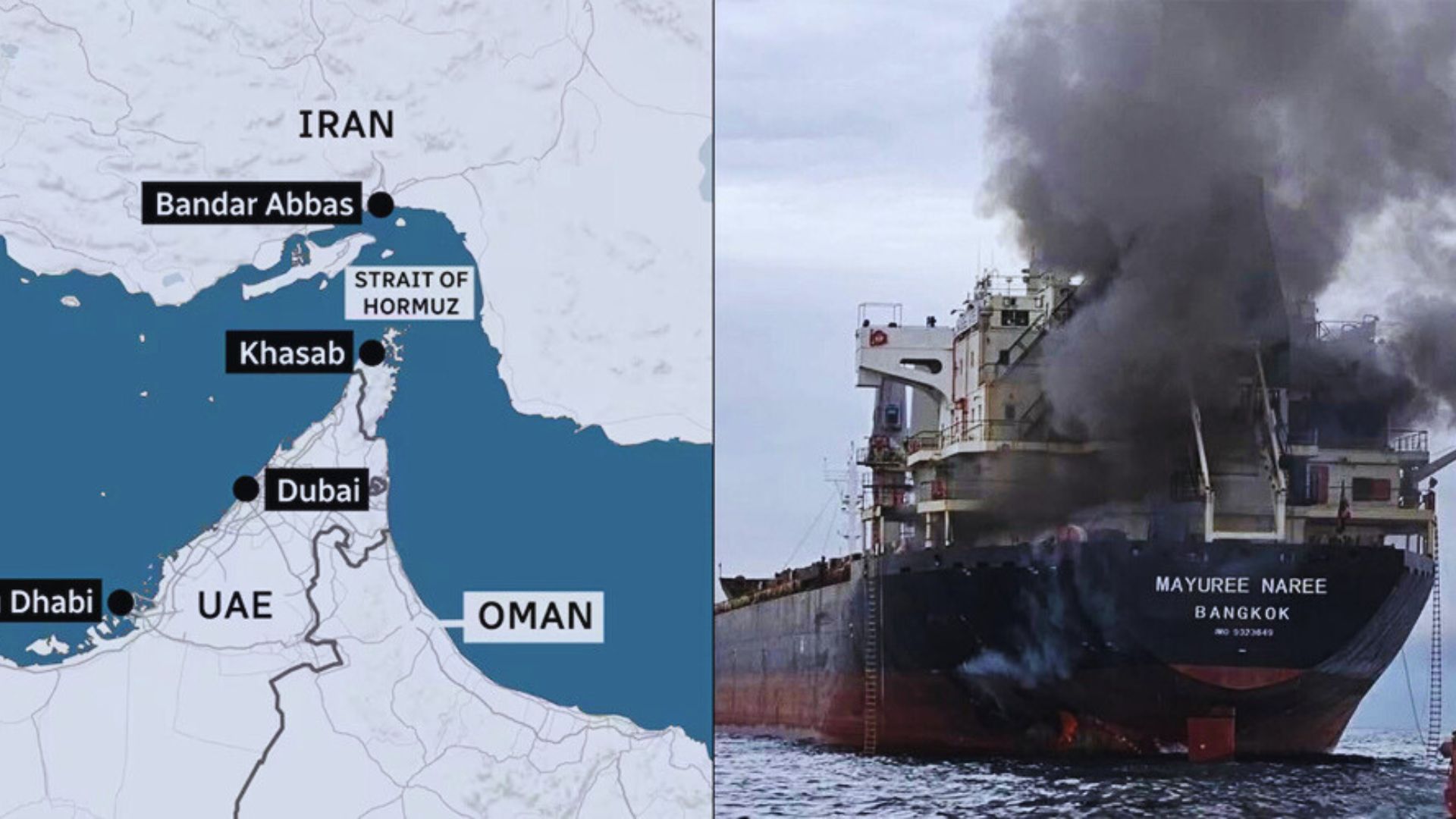
Hormuz Blockade: Is Oil Supply Possible Through Alternative Routes? The Strait of Hormuz, which carries more than 20 per cent of the world’s oil supplies, has become the world’s most sensitive chokepoint. Iran has imposed a blockade on the Strait of Hormuz following the joint US-Israeli military operation Operation Epic Fury on February 28, 2026.
The Iranian Revolutionary Guard Corps (IRGC) has launched a series of sea mine and drone attacks, threatening to set ships on fire in the Strait of Hormuz. This has caused an unprecedented crisis in the world oil market.
But this is not the first time the Strait of Hormuz has been in dispute. Although Hormuz has never been completely blocked for long periods of time, there have been frequent partial blockades due to threats, attacks and mining.
The world’s ‘oil artery‘
The Strait of Hormuz is a narrow sea passage connecting the Persian Gulf and the Gulf of Oman. It is bordered by Iran to the north and Oman’s Musandam Peninsula to the south. The Strait of Hormuz is 167 km long and narrows from 39 km to 21 km wide.
According to 2023-2025 figures, an average of 18 to 21 million barrels of oil per day and about 20 per cent of the world’s total liquefied natural gas (LNG) passes through Hormuz. 85 per cent of this oil goes to Asian countries, especially China, India, Japan, and South Korea.
From the 10th to the 17th centuries, the Kingdom of Hormuz flourished here. The Portuguese controlled it from 1507 to 1750. After Britain withdrew from the Middle East in 1971, Iran expanded its power here.
Early Tensions (1970-1980)
The Strait of Hormuz became increasingly important after the discovery of oil in Iran in 1908. After the British withdrawal in 1971, Iran seized the island of Abu Musa, which increased tensions with Iraq.
After the Iranian Revolution of 1979, the new regime claimed full control of the Strait of Hormuz. After Iraq invaded Iran in 1980, the eight-year Iran-Iraq War began.
Iran-Iraq War and the Tanker War (1981–1988)
The Tanker War was the naval phase of the war. Iraq attacked 283 ships and Iran 168.
In March 1984, an Iraqi missile sank the Indian ship APJ Ambika. In 1987, Iran laid mines in the Strait of Hormuz. On July 24, the US ship SS Bridgeton was damaged.
On April 18, 1988, the US launched Operation Praying Mantis. In this, Iranian minelayers were destroyed, and four Iranian sailors were killed.
Series of threats after the war (1990-2025)
Throughout history, the Strait of Hormuz has repeatedly become a weapon of political bargaining. In 2008 and 2011-12, Iran threatened to close the Strait in defiance of US sanctions. Oil prices then rose by 4 per cent, but military pressure prevented the closure.
Iran threatened again in 2018-19 after the Trump administration withdrew from the nuclear deal (JCPOA). In 2019, two tankers exploded, and Iran seized the British ship Stena Impero.
This time, the first effective blockade in history
After the death of Iran’s Supreme Leader Ayatollah Ali Khamenei and the US attack, Iran’s IRGC declared the Strait of Hormuz a ‘forbidden zone’.
After the Israeli attack, Iranian drones and missiles damaged Indian and other international tankers on March 1 and 2. This directly affected the tankers’ insurance premiums. Insurance premiums have increased 4 to 6 times.
What are the alternatives?
The world has limited but important options to avert a crisis in the face of a blockade of Hormuz.
The first option is Saudi Arabia’s East-West Pipeline (Petroline). This 1,200-kilometre-long pipeline carries oil from Abqaiq to the Red Sea port of Yanbu. It has a capacity of 5 to 7 million barrels per day. Saudi Arabia has continued to export through this route during the 2026 crisis.
Alternatives also pose a challenge
Although alternative routes to bypass the Strait of Hormuz are geographically and technically available, they are riskier and more expensive than the Strait of Hormuz.
The first and foremost problem is capacity constraints. About 20 million barrels of oil pass through the Strait of Hormuz daily. While the combined capacity of all the pipelines in Saudi Arabia and the UAE is only 7 to 8 million barrels.
The third challenge is shipping costs and time. Using the route via Africa’s Cape of Good Hope would require ships to travel an additional 10,000 kilometres. This adds 15 to 20 days to the journey, which in turn increases fuel costs, crew salaries, and insurance premiums. Ultimately, this additional cost is passed on to consumers, driving up prices around the world. So these options are only temporary solutions, not a complete replacement for the Strait of Hormuz.