

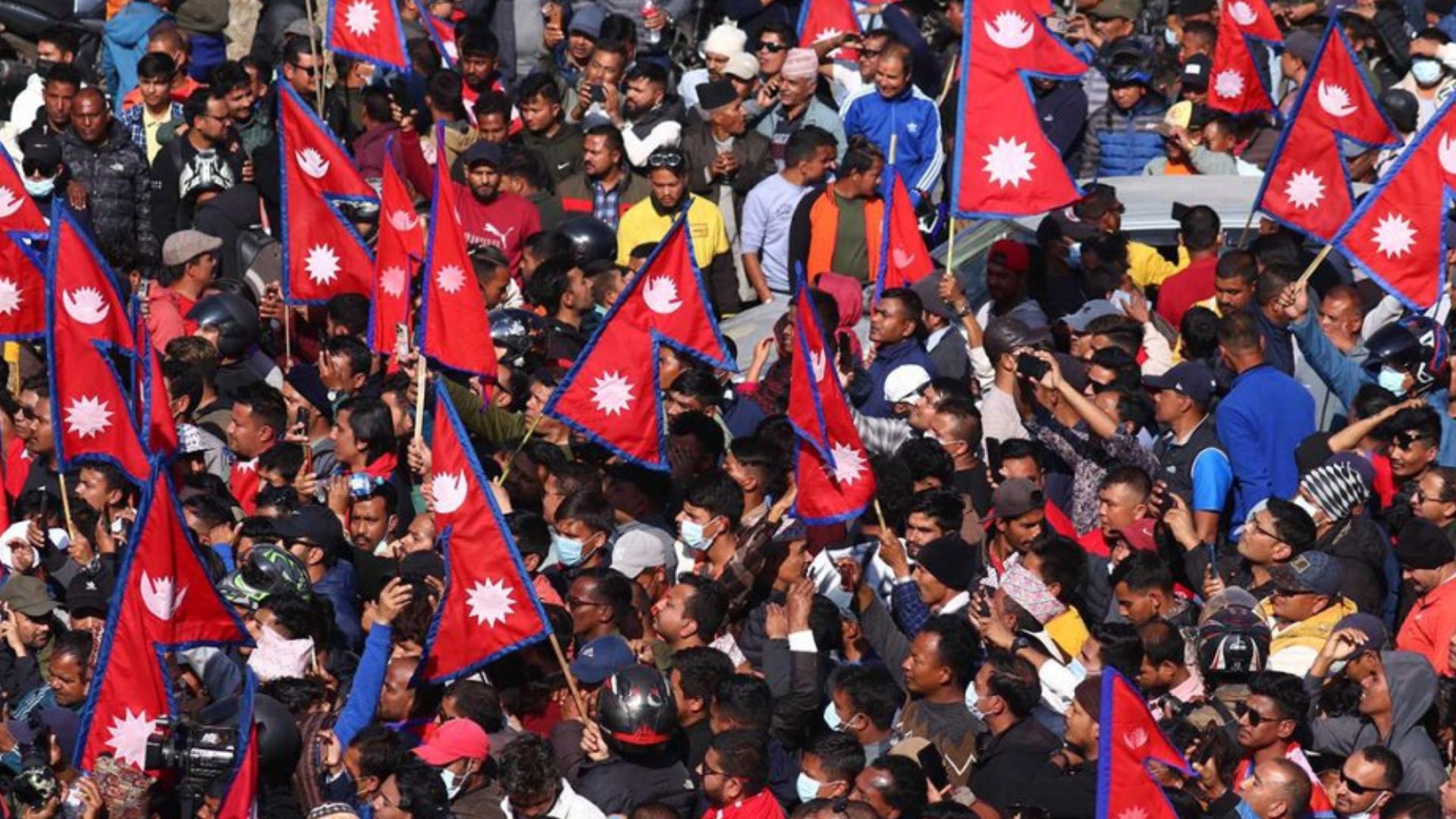
Today Is Democracy Day 2083: The Day The People Won. Today, the 20th Democracy Day is being celebrated with various programs. Baisakh 11 is considered the golden day when the direct rule of the then King Gyanendra Shah ended, and the blueprint for a new Nepal was drawn. In memory of that day, Baisakh 11 is celebrated as Democracy Day every year.
The autocratic monarchy had bowed its knees before the power of the people on this day, after the historic people’s movement of 2062/63 reached its peak with the participation of seven political parties and the then-rebel CPN-Maoist. The then King Gyanendra Shah had announced that he would move forward according to the roadmap drawn by the political parties by re-establishing the dissolved House of Representatives. In accordance with the same announcement, the meeting of the re-established parliament on 4th Jestha had suspended the monarchy and granted the Prime Minister the powers of acting head of state.
The autocratic monarchy had bowed its knees before the power of the people on this day, after the historic people’s movement of 2062/63 reached its peak with the participation of seven political parties and the then-rebel CPN-Maoist. The then King Gyanendra Shah had announced that he would move forward according to the roadmap drawn by the political parties by re-establishing the dissolved House of Representatives. In accordance with the same announcement, the meeting of the re-established parliament on 4th Jestha had suspended the monarchy and granted the Prime Minister the powers of acting head of state.
Democracy Day has been celebrated across the country since 2064 BS, after the parliament, which was dissolved on 8 Jestha 2059 BS, was restored on 11 Baisakh 2063 BS in accordance with the roadmap of the agitating parties.
After King Gyanendra took power into his own hands on Magh 19, 2061 BS, a 12-point understanding was reached between the seven agitating parties and the then armed warring CPN (Maoist). The movement gained momentum after the political forces, which were divided into three poles, came to two poles through the 12-point understanding in Mangsir, 2062 BS.
The decisive movement centred on Kathmandu, led by former Prime Minister and then President of the Nepali Congress, Girija Prasad Koirala, gained momentum in Chaitra from February 2062. With the new year, millions of people took to the streets. After the Kathmandu Ring Road was filled with a sea of people, King Gyanendra agreed to the roadmap of the parties.
On this basis, the first Constituent Assembly election was held on Chaitra 28, 2064 BS. The first meeting of the Constituent Assembly held on Jestha 15, 2065 BS, formally ended the 240-year-old monarchy. Although the first Constituent Assembly could not promulgate a constitution, it had done a lot of work.
The assembly elected from the second Constituent Assembly election held on Mangsir 4, 2070 BS, promulgated the Constitution of the Federal Democratic Republic of Nepal on Asoj 3, 2072 BS.
However, the public remains disappointed as their expectations have not been met. The series of government formations and dissolutions and corruption scandals has led to public dissatisfaction with the governance system from time to time. Democracy Day can be meaningful in a special sense in the context of providing everyone with the opportunity to bask in the warm sunshine of democracy by addressing the dissatisfaction seen among the public promptly.