

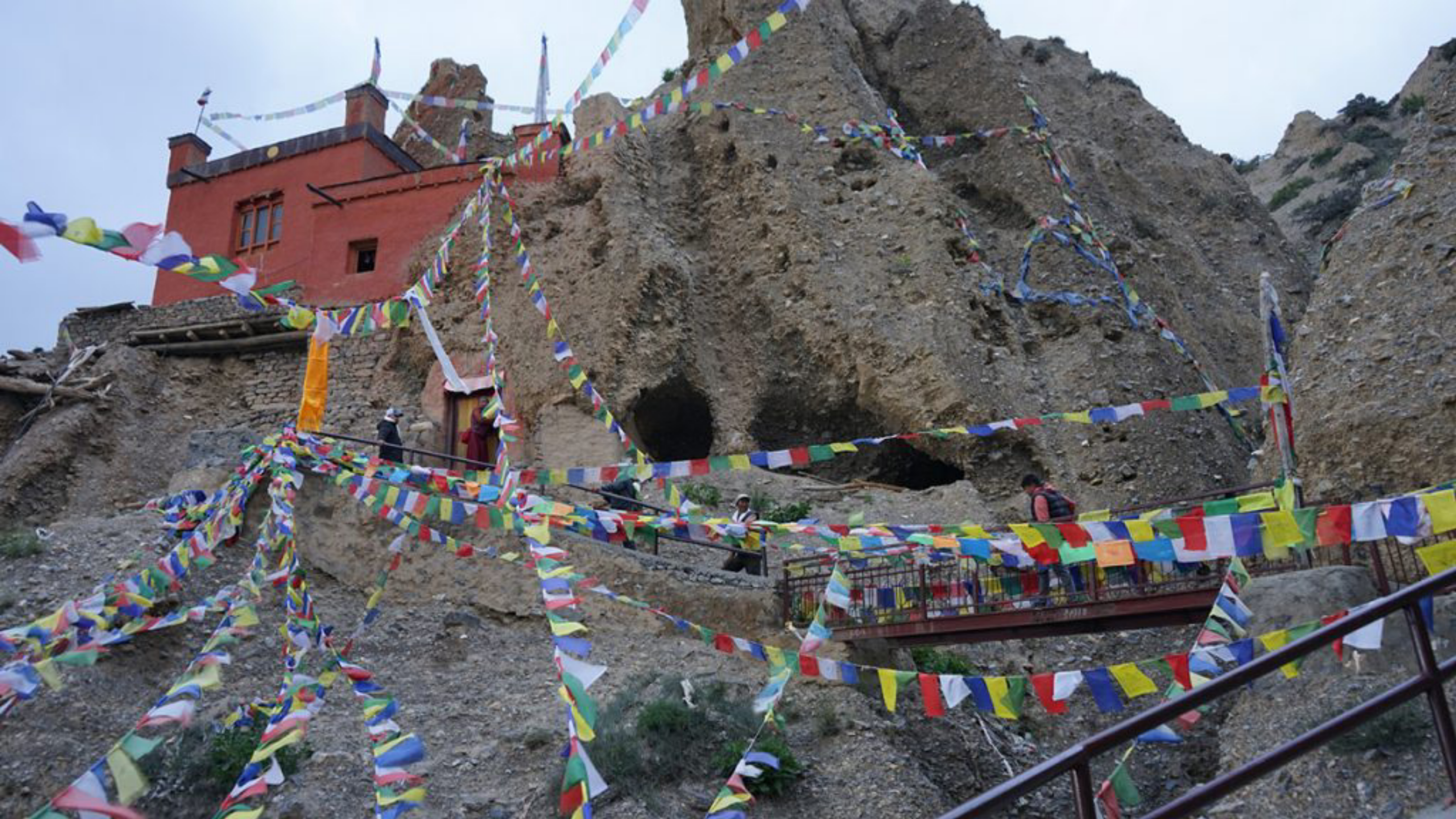
Mustang’s Luri Monastery In The Shadows The historically important Luri Gumba, located in Yara, Loghekar-Damodarkunda Rural Municipality-4, Mustang, has fallen into obscurity.
The 800-year-old cave monastery, which has been overlooked due to a lack of publicity about its religious and historical importance, is also awaiting preservation.
According to the monastery’s owner, Thakpa Dholkar, the Lurighang Monastery of the Nyingmapa sect, which is close to Tantric Buddhism, was built in the 12th century.
The monastery is located in three caves in the middle of the hill, accessed via a path and stairs. A wooden ladder is placed to reach the courtyard.
Since the rock itself was made into a pillar, the monastery has murals, books, old thangkas, and a statue of Padmasambhava. There is a history that the then King of Lho, who married a Bhutanese girl, built the Luri Monastery to please his wife.
The locals call it Luri Kavung. According to another legend, a Lama named Kunchhang Jhalu, who was born in Yaragaun and had attained the ability to fly, attained enlightenment through penance. The peak of the mountain beyond the monastery is considered by the locals to be the abode of the Kunchhang Jhalu Lama.
From Charang, the center of Loghekar Damodarkunda Rural Municipality, it takes an hour to drive through Dhykhola, Dhye, Surkhang, and Yara. After a 20-minute walk from Gharagaun, you can reach Luri Gumba, which is on the way to Damodarkunda. You can also reach here using the Luri Circuit Trek from Lomanthang. On the way to Ghara from Charang, you can observe Dhye, Surkhang, and Yaragaun, mountains with unique shapes.
Ward Chairman Pasang Gurung said that about 300 meters of paved hiking trails have been constructed in Ukalo with a budget of Rs. 1.5 million each from the rural municipality and the provincial government. Ward Chairman Gurung said that a budget of Rs. 500,000 has been allocated for the construction of public toilets this year.