

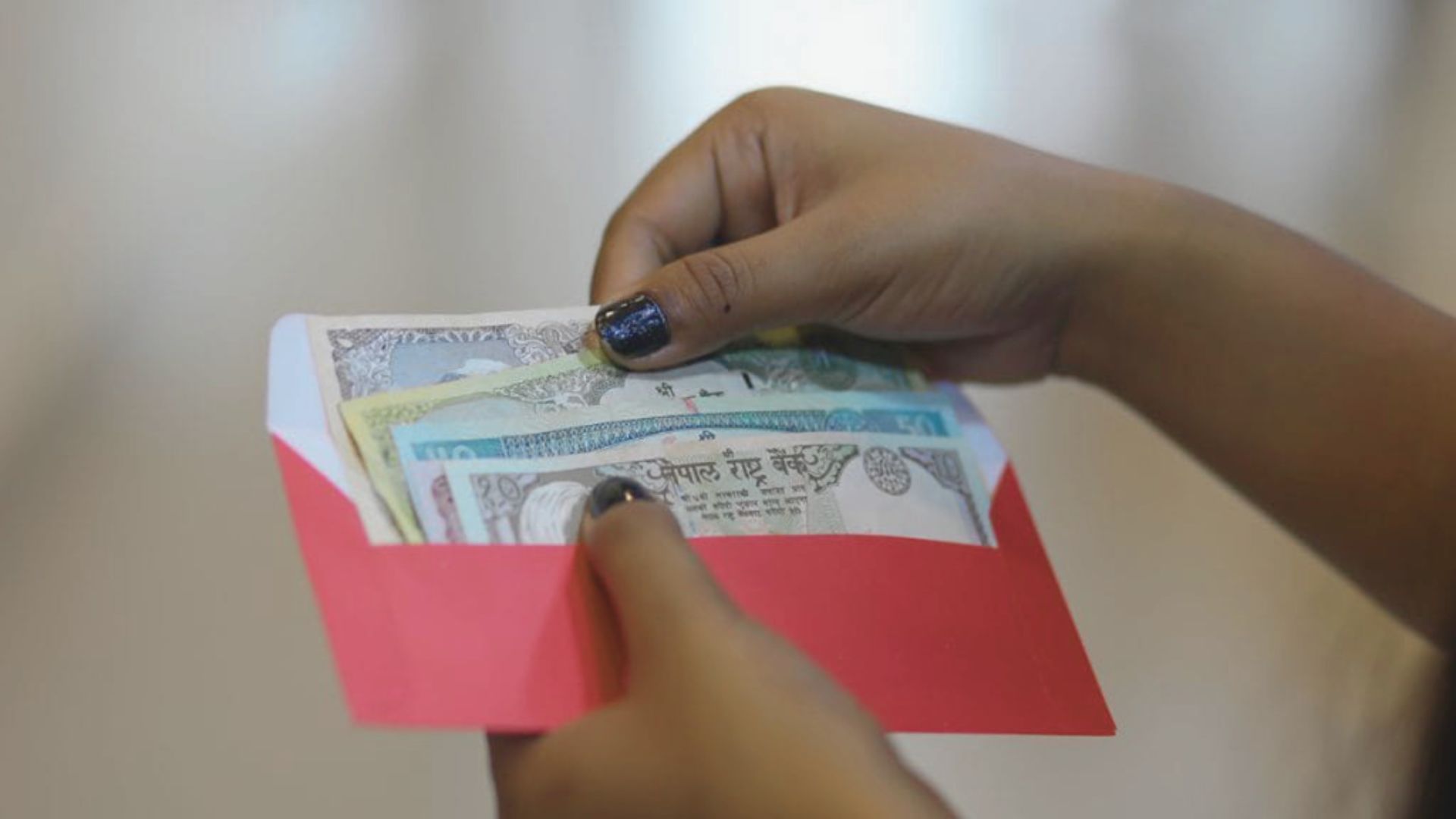
You Can Start Investing Using Your Dashain “Dakshina’—Here Are Some Suitable Options. You can develop a habit of investing using the “dakshina” (monetary gifts) received during Dashain. If you are looking for opportunities to turn this “dakshina” into seed capital for investment—to reap significant future returns—here are a few options.
First option: Mutual funds
Even if you have just 1,000 rupees, you can begin investing by purchasing units of a mutual fund.
Investments made today help build significant wealth for the future. Therefore, mutual funds are an excellent choice for developing the habit of investing. They also provide a helpful way to understand key concepts, such as the returns generated from investments and the appreciation in the value of assets.
According to Kabindradhwaj Joshi, Chief Executive Officer (CEO) of Muktinath Capital, fundamental factors are prioritised over technical aspects during the analysis process. However, mutual funds do occasionally purchase shares of certain companies specifically for trading purposes. “The portion of funds allocated for short-term trading is relatively small,” he stated.
The funds raised from the sale of mutual fund units are invested in securities such as shares and debentures of various companies. In other words, mutual funds invest the collected capital across diverse sectors. The profits generated from these investments are then distributed to the unit holders.
Open-ended schemes are not traded in the market. Those opting for a Systematic Investment Plan (SIP) purchase these very open-ended schemes. Under an SIP, as a fixed amount is paid—either monthly or quarterly—units of the scheme are credited to the investor’s Demat account.
Currently, there are 45 closed-ended schemes listed in the market. Including about 18 open-ended schemes, a total of 63 schemes are in operation. As the number of mutual fund schemes increases, their total assets and investments in shares are also growing.
Another suitable investment option: shares
Shares of 280 companies are listed in the market. You can choose to purchase shares in companies from sectors that interest you. However, before buying shares, it is essential to thoroughly examine various aspects, such as the company’s business activities, earnings and financial condition, its board of directors, and its history of dividend payouts. Once you have conducted such an analysis, you can purchase shares from the comfort of your own home, and later sell them to realise a profit when the opportunity arises.
Well-performing commercial banks can be a suitable option. Shares of commercial banks that consistently pay annual dividends can be purchased at a price starting from around 250 rupees per share.
You can open a Demat account by visiting various capital firms or brokerage companies (acting as Depository Participants), while a trading account can be opened through a brokerage firm. Once a trading account is established, you can buy and sell shares yourself from the comfort of your home using the TMS (Trading Management System). Shares purchased in this manner are credited to your Demat account, and when sold, they are debited from the same account.
Third option: Gold and silver
Gold is also a suitable investment option. However, there are certain factors to consider before investing in it. Jewellers sell gold exclusively in the form of ornaments. Purchasing gold in this form ends up costing 5 to 15 per cent more due to labour charges and wastage (manufacturing loss). When you sell these ornaments later, you do not recover the costs incurred for this labour and wastage.
The annual fee for a bank locker starts at a minimum of 3,000 rupees, depending on its size. Additionally, a minimum deposit of 10,000 rupees is required. Furthermore, there is no guarantee of 100% security for the items stored in the locker; in the event that the locker itself is destroyed due to a major disaster or crisis, no one will bear the loss of those items.
Since such alternatives are not available here, one must—before investing in gold and silver—consider everything from the risks associated with a potential decline in value to the arrangements for security.