

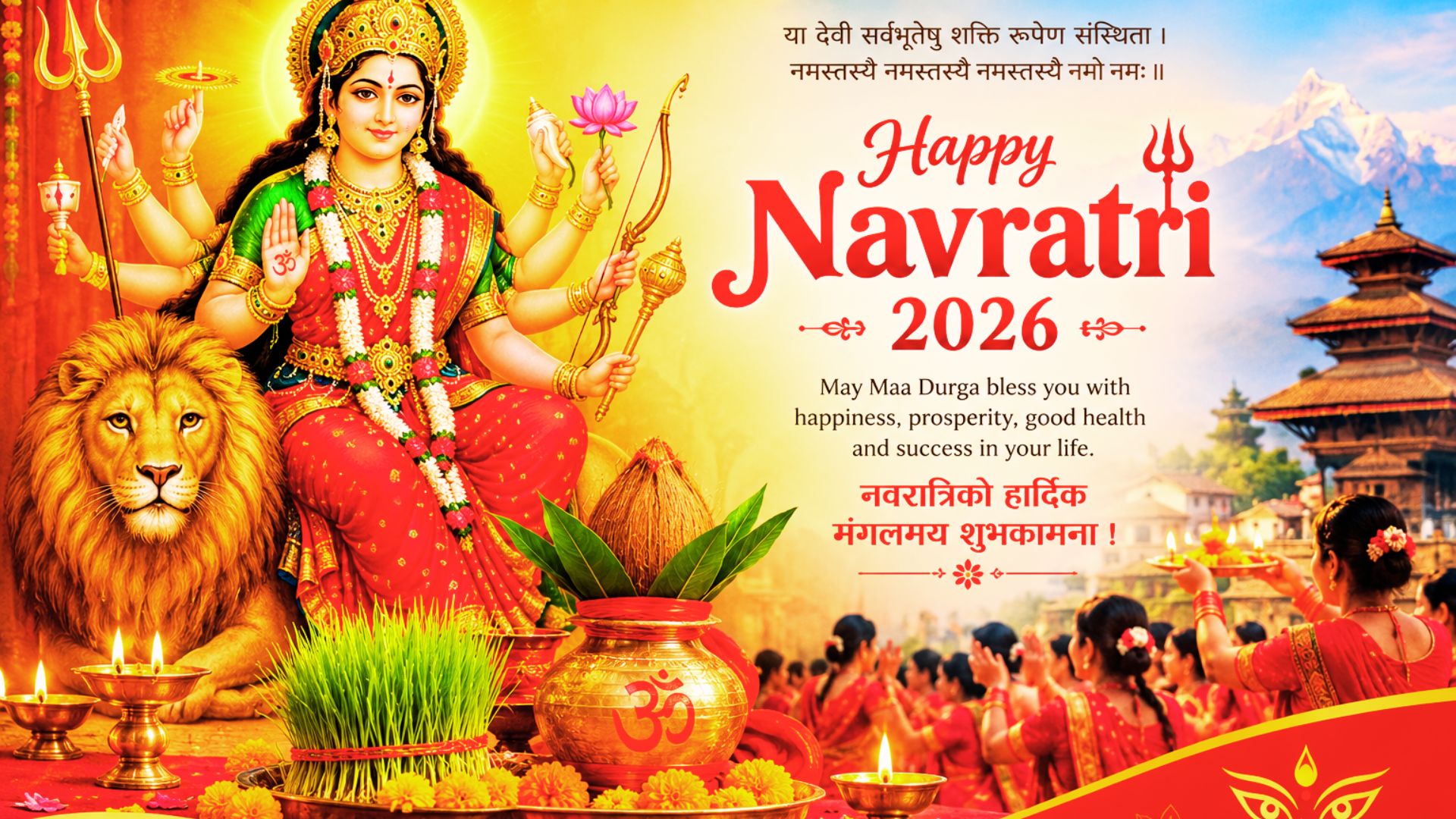
Navratri in Nepal 2026/2083: Rituals, Traditions, and Today’s Festive Magic. Today is celebrated as the core religious and cultural foundation of Dashain (officially known as Bada’dashain), the country’s longest and most auspicious festival. It spans the first nine nights of the bright lunar fortnight in the month of Ashvin (September–October), honouring the nine manifestations of Goddess Durga (Navadurga).
Today in Nepal, the solemn and vibrant spirit of Navratri culminates in Maha Navami, the ninth sacred day of the festival. In the Nepali calendar year 2083 BS, this day marks the final, powerful night of worshipping Goddess Durga in her fierce manifestations—specifically Siddhidhatri—before tomorrow’s Grand Vijaya Dashami.
Tools of livelihood, machinery, vehicles, and household implements are cleansed, anointed with vermilion paste (tika), and offered garlands of marigolds as gestures of gratitude and prayers for safety and success in the coming year.
Today holds a unique significance in Kathmandu Valley: the historical Taleju Bhawani Temple at Kathmandu Durbar Square opens its doors to devotees. This sacred 14th-century shrine remains closed to the public all year round, making today the single annual opportunity for thousands of pilgrims to queue up, offer prayers, and pay homage to the royal deity.
Across every neighbourhood, the aroma of traditional festive cooking fills the air—spiced goat meat (fulaura, mutton curry), beaten rice (chiura), and sweet delicacies are prepared for family feasts. Underneath the sacred kalash (pot) established back on Ghatasthapana, the golden shoots of jamara (barley grass) have grown tall and vibrant in dark sanctums, ready to be harvested for tomorrow’s ceremonies.
Navratri in Nepal is far more than an abstract cultural observance—it is a homecoming. Today represents the final quiet moments of intense worship and preparation before elders bless the younger generations with red tika, jamara, and dakshina on Vijaya Dashami. It stands as a powerful testament to faith, togetherness, and the enduring resilience of Nepali culture.